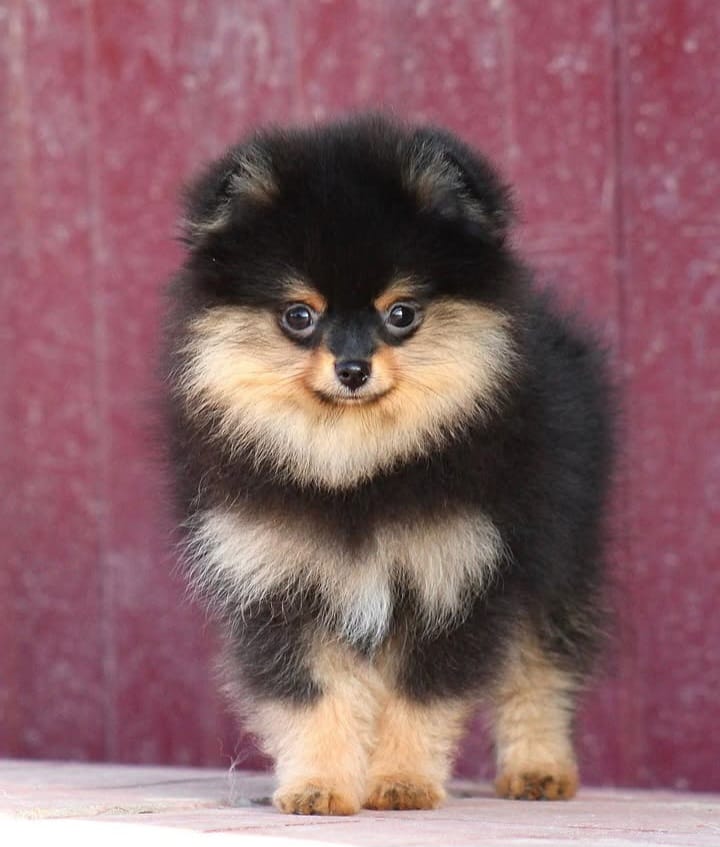
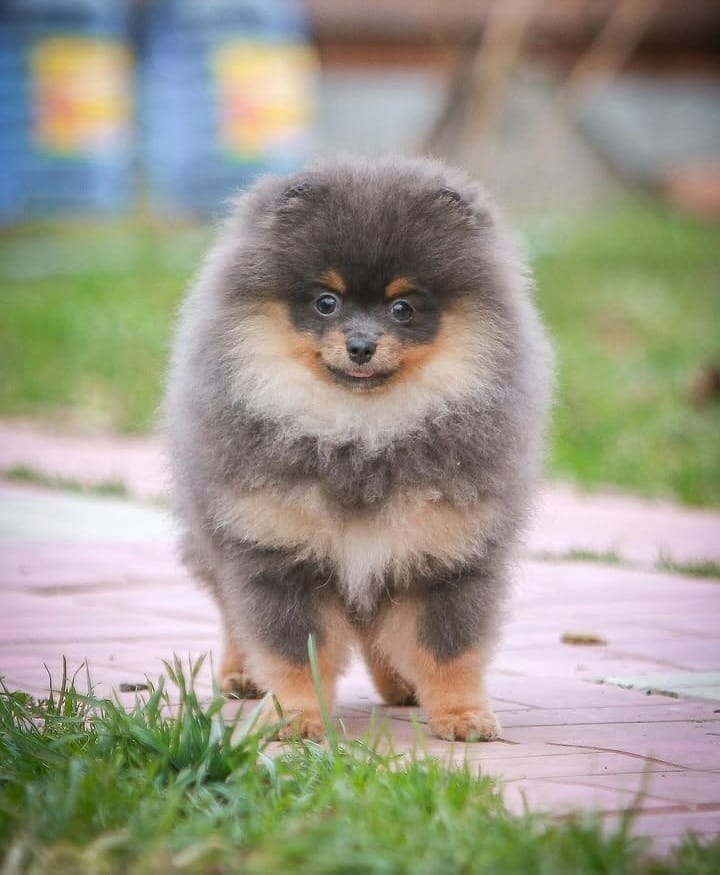
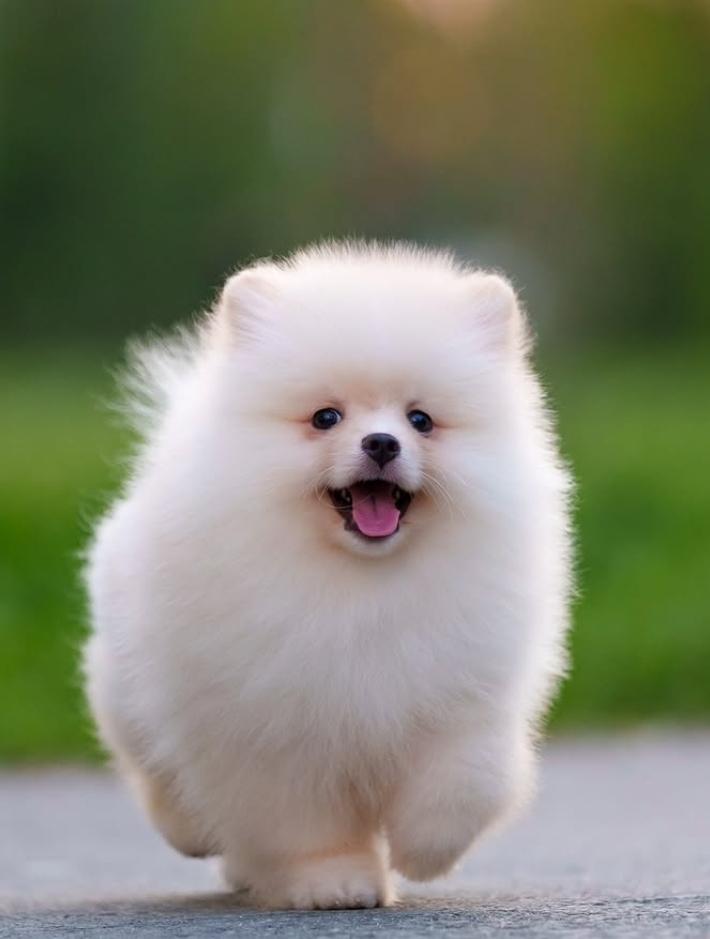
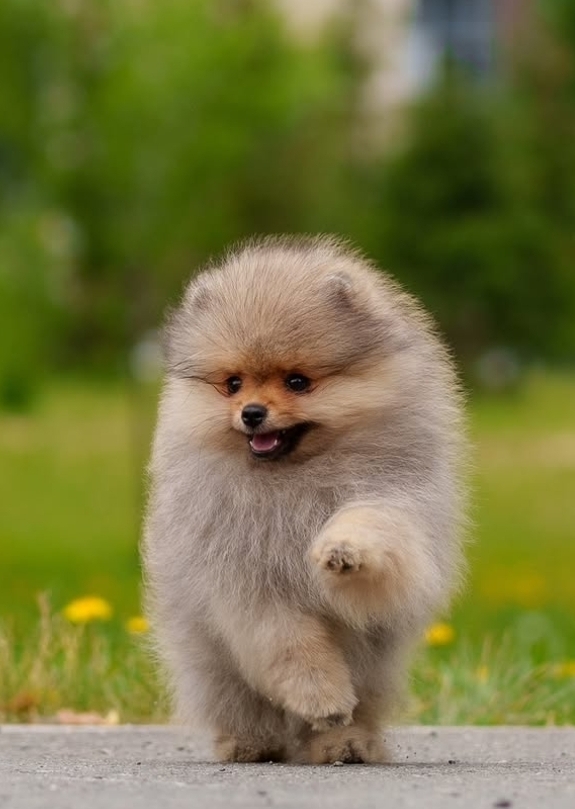
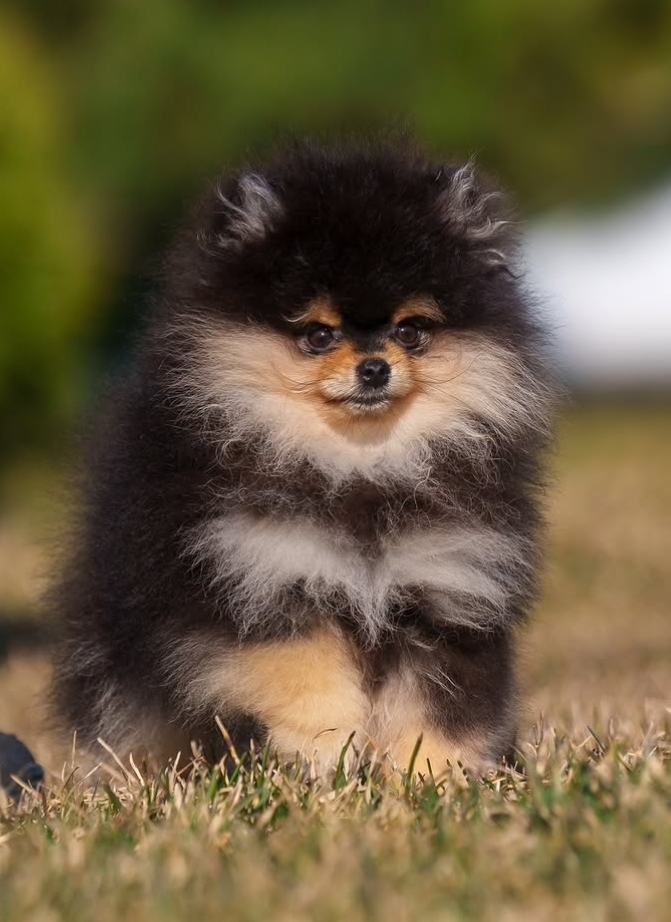
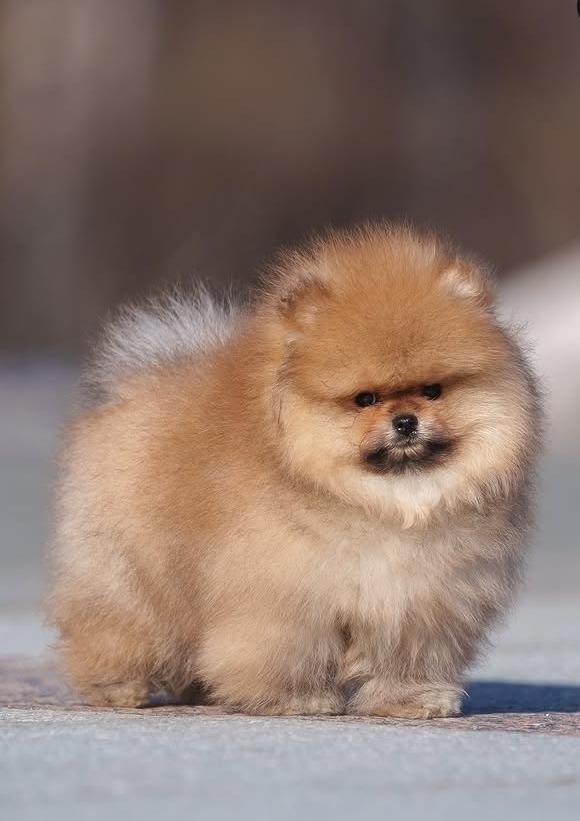
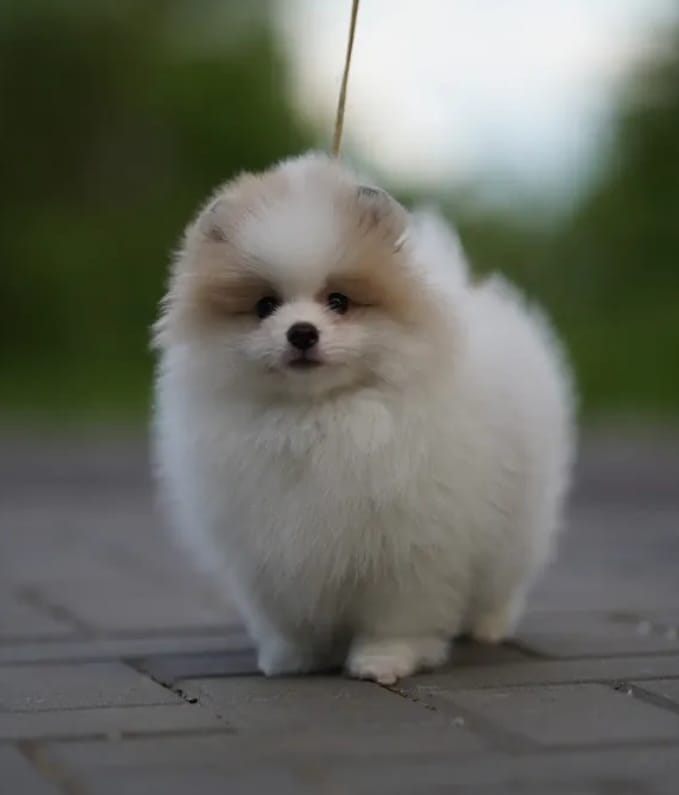
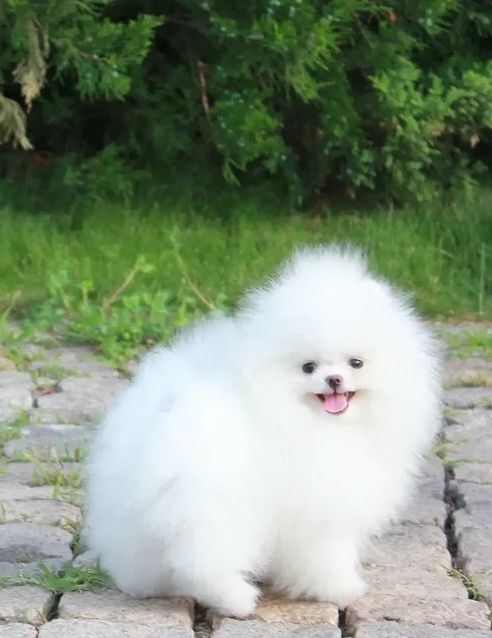
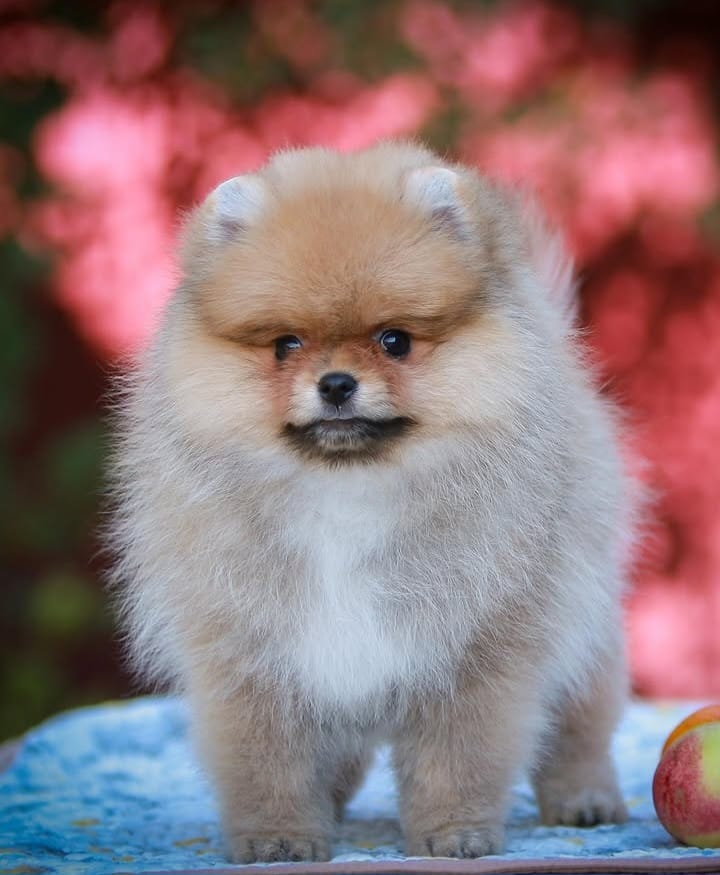
The Pomeranian is a small, toy-sized dog. The head is wedge-shaped and in proportion with the body. The short muzzle is straight and fine. The stop is well pronounced. The color of the nose varies with coat color. The teeth meet in a scissors bite. The almond-shaped eyes are dark and medium in size. The small, erect ears are set high. The feathered tail lies straight and flat over the back. Dewclaws are sometimes removed. The Pom has a thick, double coat. The outer coat is long, straight and harsh in texture, while the undercoat is soft, thick and short. The coat is longer around the neck and chest area. Comes in a variety of coat colors and patterns including red, orange, white, cream, blue, brown, black, black and tan, wolf sable, orange sable, brindle and parti-color, which is white with colored markings.
The Pomeranian is a proud, lively little dog. It is intelligent, eager to learn, very loyal to its handler and family. The Pom is a wonderful companion and show dog. The breed’s docile temper and affectionate nature endear it to many. It is alert, inquisitive and active: one of the most independent of the toy breeds, it needs a firm, gentle hand. Its liveliness and spirit make it well-liked by persons who do not usually care for toy dogs. Pomeranians may be picky eaters. If they are properly introduced they usually get along with other dogs and household animals without any problems. Poms make good little watchdogs. Teach this dog early that it may bark a couple of times when the doorbell rings or when there are visitors, but then to keep quiet. Be very consistent about this. Poms have a delightful nature and do not cling to their handlers. This happy pup is good at learning tricks. Pomeranians need to see their owners as boss or they will become very demanding. If you allow your dog to tell YOU when and where to do things than you have a potential problem on your hands and you may not even realize it. It is not cute or smart, it’s dominance and will lead to bigger problems in the future if it has not already. Because of this breeds tiny size and its adorable Ewok-looking face, there are a very high percentage of Poms that fall victim to Small Dog Syndrome, human induced behaviors where the dog believes he is pack leader to humans. This can cause many varying degrees of behavior problems, which are NOT Pomeranian traits, but behaviors brought on by the way they are treated by the humans around them. Behaviors include, but are not limited to separation anxiety, becoming willful, nervous, bold and sometimes temperamental, not hesitating to attack much bigger dogs. Guarding behaviors and excessive barking as they try and tell THEIR humans what THEY want them to do. They can become reserved with strangers, barking at them excessively, and sometimes growling, snapping and biting. Because most humans treat this tiny canine in such a manner that the dog does not see them as pack leader, they are not recommended for children. However, if a Pom is given rules to follow, limits as to what it is allowed to do, daily pack walks and a calm, self-assured pack leader who displays confident assertion towards the dog, this can be a well-rounded, mentally stable, trustworthy, wonderful family companion. Because of its size, it can make a good companion for an elderly person.

 Vaccination Up to Date